
Top Ethical Fashion Influencers You Should Follow in 2026 USA
Ethical fashion is no longer a niche movement—it’s becoming the standard. As consumers across the United States demand transparency, fair labor practices, and sustainable materials, the sustainable fashion movement has grown rapidly, bringing together designers, influencers, and activists to transform the industry. Ethical fashion influencers are playing a critical role in reshaping how people discover, evaluate, and support fashion brands.
In 2026, influence is no longer about trends alone. It’s about education, accountability, and long-term impact. From Instagram to TikTok and YouTube, U.S.-based creators are using their platforms to challenge fast fashion, expose greenwashing, and make ethical style accessible to everyday shoppers. These influencers are also shaping the sustainable fashion space, driving important discussions around inclusivity, activism, and social justice within the industry.
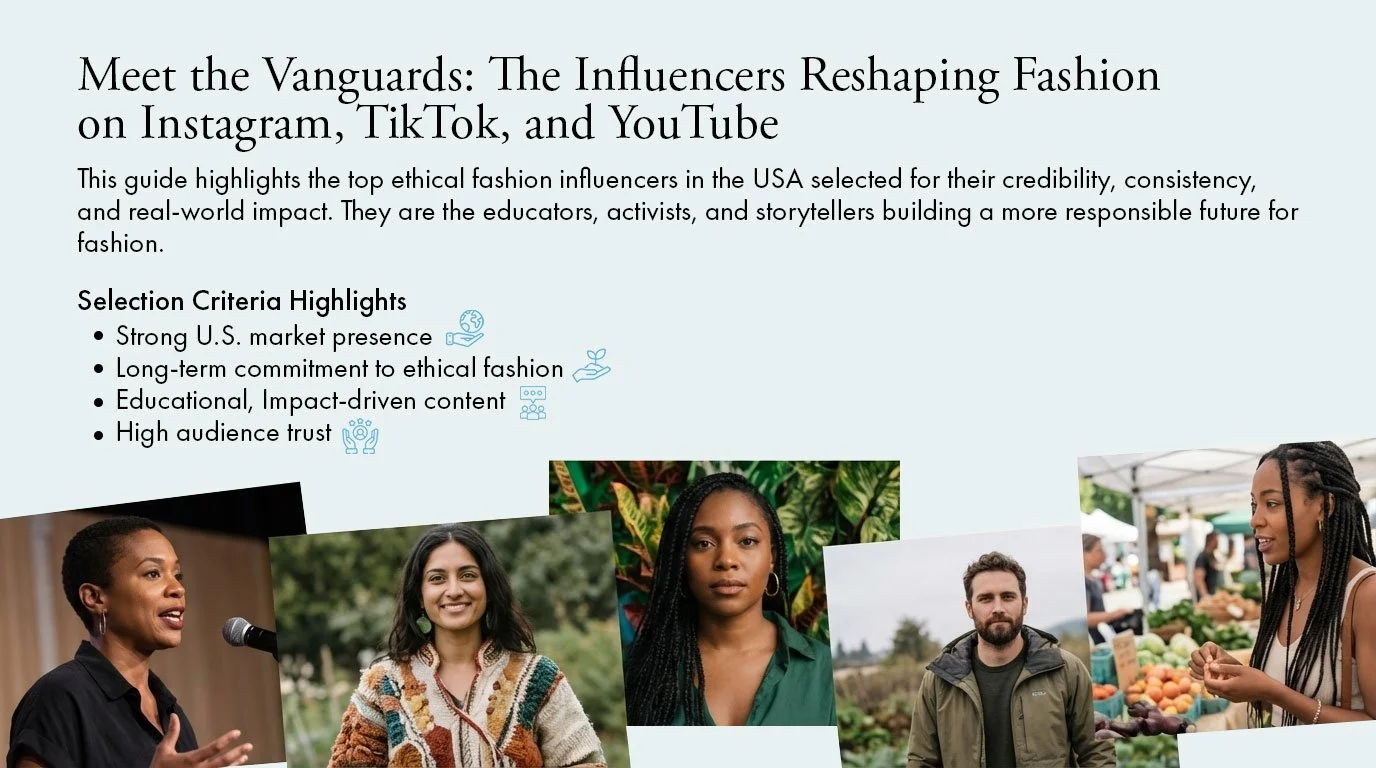
This guide highlights the top ethical fashion influencers in the USA you should follow in 2026. It’s organized by platform and selected for credibility, consistency, and real-world impact.
Quick Summary
This article features leading ethical fashion influencers and top sustainable fashion influencers in the United States to follow in 2026 across Instagram, TikTok, and YouTube. These creators advocate for sustainable fashion, ethical labor, slow fashion, and transparent brand practices, helping consumers make informed and responsible fashion choices.
Who This Guide Is For
U.S. consumers interested in ethical and sustainable fashion
Fashion brands seeking trustworthy ethical fashion influencers
Marketers and founders working in conscious commerce
Creators and students researching sustainable fashion trends, including those who run or read a blog about sustainable fashion and activism
Anyone looking to avoid greenwashing and misleading “eco” claims
What Are Ethical Fashion Influencers?
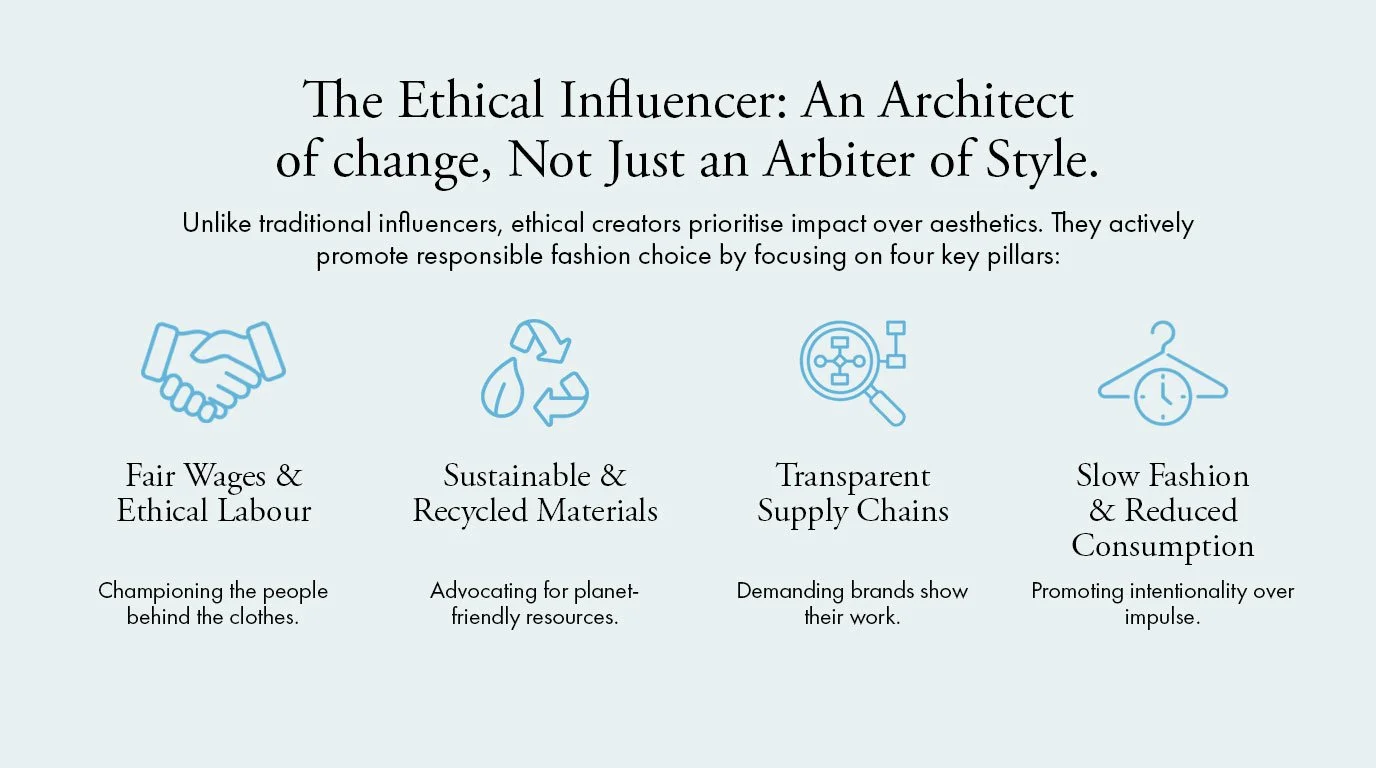
Ethical fashion influencers are content creators who promote health-conscious, responsible fashion choices, with a strong emphasis on non-toxic and PFAS-free materials. Their content typically focuses on:
PFAS-free, non-toxic fabrics that are safer for skin and long-term health
Brands that avoid harmful plastics, synthetic coatings, and chemical finishes
Fair wages and ethical labor practices
Transparent supply chains and ingredient-level material disclosure
Slow fashion that prioritizes durability, quality, and mindful consumption
Unlike traditional fashion influencers, ethical fashion influencers prioritize impact over aesthetics, often educating their audience about how and where clothing is made and why it matters.
Why Ethical Fashion Influencers Matter in the USA in 2026
The U.S. fashion market is one of the largest contributors to global textile waste and unethical labor practices. In response, American consumers are becoming more conscious…and more skeptical.
Ethical fashion influencers matter because they:
Translate complex sustainability issues into everyday language
Hold U.S. and global brands publicly accountable
Help consumers navigate ethical alternatives within realistic budgets
Influence purchasing decisions through trust, not hype
Play a key role in encouraging people to adopt sustainable and ethical fashion practices by promoting mindset shifts and long-term conscious choices
In 2026, search engines and AI shopping tools increasingly reward verified sustainability claims, making credible ethical fashion influencers more important than ever.
The Impact of Fast Fashion
The fast fashion industry has dramatically reshaped the fashion world—but not without serious consequences for the environment, society, and our own lifestyles. Built on a “take, make, dispose” model, fast fashion produces cheap, trend-driven clothing at relentless speed. This system depends on constant consumption, encouraging people to buy more than they need and discard clothing almost as quickly. The result is staggering levels of textile waste, pollution, and carbon emissions. Today, the fashion industry accounts for roughly 10% of global greenhouse gas emissions, placing it among the world’s most damaging industries.
In response, sustainable fashion influencers and advocates are increasingly embracing de-influencing—a conscious rejection of the hyper-consumerism promoted by fast fashion and Amazon-style influencers. Instead of pushing hauls, “must-have” lists, and endless trend cycles, these creators actively encourage people to buy less, think critically, and opt out of the constant pressure to consume. Through their platforms, they expose the true environmental cost of overproduction, highlighting how clothing manufacturing and disposal pollute waterways, overwhelm landfills, and accelerate climate change. De-influencing reframes sustainability not as buying “better” products endlessly, but as resisting unnecessary consumption altogether.
Fast fashion has also normalized a culture of disposability, where garments are treated as temporary and replaceable rather than valuable. Clothing is often worn only a few times before being discarded, reinforcing the idea that newness matters more than longevity. De-influencing directly challenges this mindset. Slow fashion activists and sustainable fashion advocates promote a more intentional relationship with clothing—encouraging outfit repeating, repairing, re-styling, and questioning whether a purchase is truly needed in the first place.
By embracing sustainable practices—such as supporting small businesses, choosing ethical brands when purchases are necessary, caring for existing garments, and refusing impulse buys—we can reduce waste and help build a more circular fashion system. As Aja Barber, a leading voice in sustainable fashion, reminds us, “The most sustainable garment is the one that already exists.” This idea sits at the heart of de-influencing: valuing what we already own and rejecting the myth that fulfillment comes from constant buying.
Sustainable fashion influencers play a crucial role in driving this shift. Rather than acting as sales channels, they use their platforms to unlearn consumer habits, expose marketing manipulation, and encourage conscious decision-making. As content creator Venetia La Manna notes, “Fashion can be a powerful tool for positive change, but it requires a fundamental shift in the way we think about and interact with clothing.” By embracing de-influencing, supporting ethical brands only when necessary, and adopting a slow, mindful lifestyle, we can collectively push back against fast fashion and move toward a more sustainable and equitable future.
Top Ethical Fashion Influencers on Instagram (USA – 2026)
Why Instagram Leads the Way
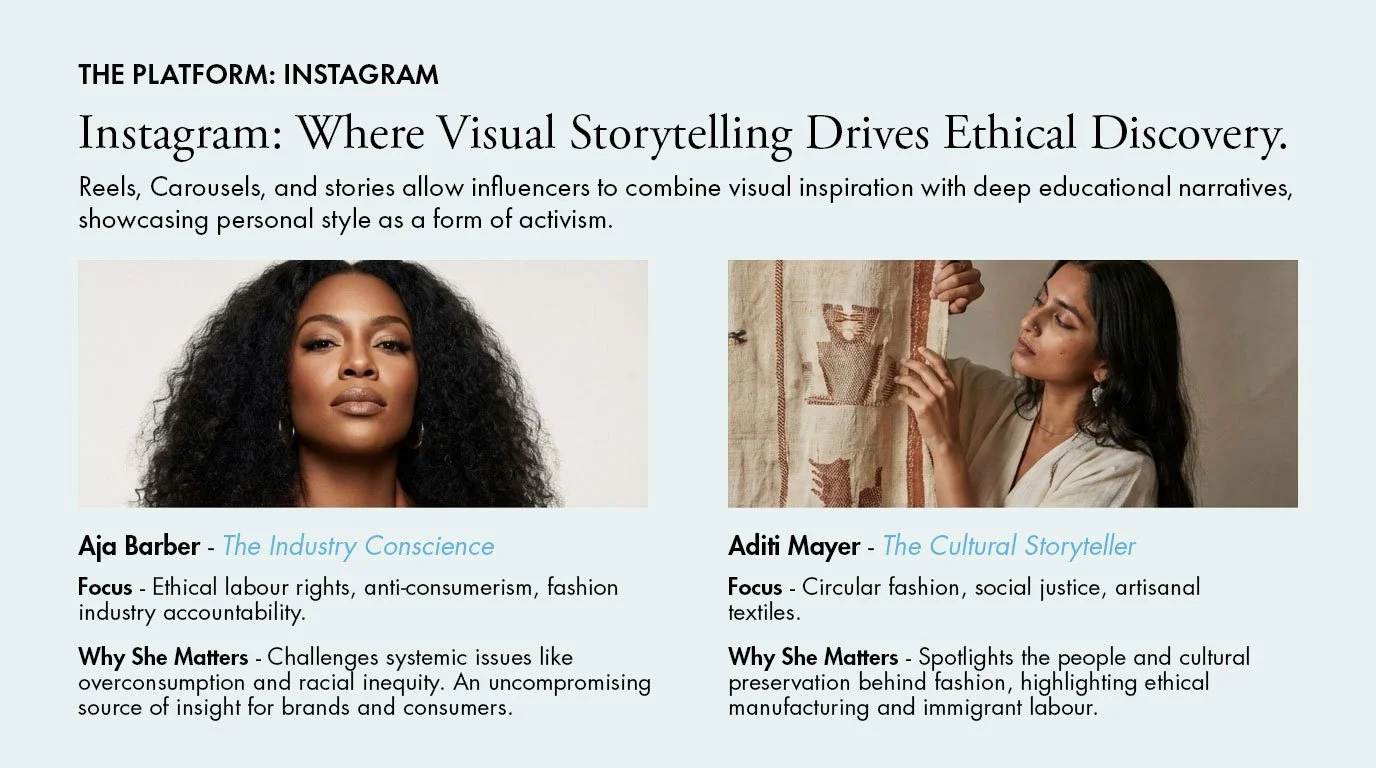
Instagram stands as the unrivaled platform for ethical fashion influencers in the U.S. With its innovative features like Reels, carousels, and immersive Stories, Instagram outpaces all other social media channels for discovery and engagement in the ethical fashion space. No other platform offers such a dynamic blend of visual storytelling, community interaction, and powerful tools for influencers to express their unique styles. Its vibrant ecosystem not only inspires millions but also empowers influencers to drive the conversation on sustainability and ethical practices, solidifying Instagram’s position as the top choice for both creators and their audiences.
Aja Barber
Platform: Instagram
Location: USA
Focus Areas:
Ethical labor rights
Anti-consumerism
Fashion industry accountability
Why Aja Barber Matters in 2026
Aja Barber is one of the most respected ethical fashion voices in the United States. As a slow fashion activist, she inspires others to rethink their fashion choices and advocates for sustainable, ethical practices. Her content goes beyond outfit posts—she challenges systemic issues in fashion, including overconsumption, racial inequity, and exploitative labor. Brands and consumers alike look to her for honest, uncompromising insight.
Aditi Mayer
Platform: Instagram
Location: USA
Focus Areas:
Circular fashion
Social justice in fashion
Artisanal and heritage textiles
Why Aditi Mayer Matters in 2026
Aditi Mayer combines journalism, photography, and activism to spotlight the people behind fashion. She views fashion as a form of art and uses her platform to highlight the artistry and craftsmanship behind ethical and sustainable clothing. Her U.S.-based platform highlights ethical manufacturing, immigrant labor, and sustainable design rooted in cultural preservation.
Dominique Drakeford
Platform: Instagram
Location: USA
Focus Areas:
Sustainable lifestyle
ethical fashion
Why Dominique Drakeford Matters:
Dominique blends ethical fashion with environmental justice, making conscious fashion feel realistic and inclusive. She actively promotes sustainable living by encouraging followers to integrate ethical practices into their daily lives, embracing imperfect sustainable fashion without the pressure of perfection. As a passionate advocate for climate change awareness and social justice, Dominique uses her platform as an image maker and storyteller to highlight the intersectionality of fashion, race, and environmental impact. Her vibrant colors and bold personal style serve as inspiration for many women seeking to express themselves authentically while supporting ethical brands. Through her Instagram account and engaging me videos, she connects deeply with a diverse audience, including young age groups, fostering a community that values self love, conscious choices, and positive change within the fashion industry.
Venetia La Manna (U.S.-focused activism & reach)
Platform: Instagram
Location: USA / UK audience
Focus Areas:
Greenwashing awareness
Brand transparency
Ethical accountability
Why She Matters in the U.S. Market
Venetia’s impact strongly influences U.S. consumers and brands. Her public call-outs of misleading sustainability claims have shaped how American audiences evaluate “eco-friendly” fashion.
Marielle Elizabeth
Platform: Instagram
Location: USA
Focus Areas:
Slow fashion
capsule wardrobes
Why Marielle Elizabeth Matters in 2026
Marielle Elizabeth offers practical, minimalist ethical fashion advice that resonates with a diverse audience. As a prominent advocate for size inclusivity within the sustainable fashion space, she highlights the importance of accessibility and representation in ethical brands. Marielle’s approach combines slow fashion principles with vibrant colors and thoughtful styling, encouraging followers to embrace their personal style while supporting sustainable brands. Through her Instagram account and engaging content, she raises awareness about the challenges plus-sized individuals face in finding sustainable fashion options, making her a vital voice in the movement toward a more inclusive and ethical fashion industry.
Clean Living Karly (Karly Fitzgerald)
Platform: Instagram
Location: USA
Focus Areas:
Non-toxic fashion and safer fabric choices
Slow fashion and intentional wardrobes
Capsule wardrobes with health-first materials
Size-inclusive, body-respecting clothing
Why Karly Fitzgerald Matters in 2026
Karly Fitzgerald, known as Clean Living Karly, is a trusted voice in the non-toxic fashion and clean living space, advocating for clothing that is safer for both the body and long-term health. Her content emphasizes PFAS-free, low-toxin, and thoughtfully sourced fabrics, helping followers understand that what we wear daily has a direct impact on skin health and overall well-being.
Unlike broader sustainability narratives that often promote recycled synthetics, Karly focuses on reducing chemical exposure through clothing, encouraging the use of natural and minimally processed materials wherever possible. She pairs these principles with slow fashion and capsule wardrobe strategies, showing how fewer, better pieces can support both health and style.
Instagram Comparison Table
| Influencer | Primary Focus | Best For |
|---|---|---|
| Aja Barber | Ethical labor & justice | Industry education |
| Aditi Mayer | Circular fashion | Ethical storytelling |
| Dominique Drakeford | Lifestyle sustainability | Everyday conscious living |
| Venetia La Manna | Greenwashing awareness | Brand accountability |
| Marielle Elizabeth | Slow fashion | Minimalist ethical fashion advice |
| Karly Fitzgerald | Non toxic living | Capsule wardrobes with health-first materials |
Top Ethical Fashion Influencers on TikTok (USA – 2026)
Why TikTok Leads Ethical Fashion Education
TikTok has become the most influential platform for ethical fashion discovery in the U.S. Short-form videos allow creators to quickly expose misleading claims, compare brands, and educate younger audiences, making learning about ethical fashion fun and accessible.
@ConsciousCatherine (Catherine)
Platform: TikTok
Location: USA
Focus Areas:
Thrifted fashion
Slow fashion alternatives
Budget-conscious ethical style
Why She Matters in 2026
Catherine makes ethical fashion accessible to Americans who can’t afford luxury sustainable brands. Her thrifting-first approach resonates with Gen Z and first-time conscious shoppers. She often features thrift store finds and encourages her audience to build a sustainable wardrobe through second-hand shopping.
@ImruhAsha
Platform: TikTok
Location: USA
Focus Areas:
Ethical menswear
Inclusive fashion
Sustainable styling
Why Imruh Matters in the U.S.
Ethical menswear is underrepresented in sustainability conversations. Imruh fills this gap by proving ethical fashion can be stylish, inclusive, and masculine without fast fashion.
Sophie Benson (U.S. audience focus)
Platform: TikTok
Location: USA / UK
Focus Areas:
Sustainable fashion journalism
Brand analysis
Ethical shopping education
Why She Matters in 2026
Sophie’s journalistic approach helps U.S. consumers understand sustainability beyond marketing language. Her explainers are frequently referenced by ethical fashion communities.
@SustainablyChic (Natalie Kay)
Platform: TikTok
Location: USA
Focus Areas:
Ethical brand discovery
Conscious shopping
Affordable sustainability
Why Natalie Matters in 2026
Natalie bridges the gap between aspiration and accessibility, highlighting ethical brands available to U.S. shoppers without overwhelming them. She encourages her audience to shop mindfully, prioritizing ethical and sustainable brands in their purchasing decisions..
@TheeThriftyGurl
Platform: TikTok
Location: USA
Focus Areas:
Secondhand fashion
Why TheeThriftyGurl Matters in 2026:
Normalizes thrifting over buying new.
TikTok Comparison Table
| Influencer | Focus | Best For |
|---|---|---|
| Conscious Catherine | Thrifting | Budget-friendly ethics |
| Imruh Asha | Ethical menswear | Inclusive fashion |
| Sophie Benson | Fashion education | Sustainability beginners |
| Sustainably Chic | Brand discovery | Conscious shopping |
| TheeThriftyGurl | Secondhand fashion | Thrifting |
Top Ethical Fashion Influencers on YouTube (USA – 2026)
Why YouTube Is Ideal for Ethical Fashion
YouTube allows ethical fashion influencers to go deep—reviewing brands, breaking down supply chains, and teaching viewers how to build sustainable wardrobes over time. The platform also enables influencers to share their sustainable life and holistic approach to fashion and living, inspiring audiences to embrace intentional, eco-conscious choices.
Kristen Leo
Platform: YouTube
Location: USA-based audience
Content Focus:
Sustainable brand reviews
Capsule wardrobes
Conscious consumer education
Why Kristen Leo Matters in 2026
Kristen’s YouTube channel remains one of the most trusted resources for ethical fashion research. Her detailed brand reviews help U.S. consumers avoid greenwashing and make informed purchases. Kristen also demonstrates multiple ways to style and re-wear pieces in a capsule wardrobe, showing the versatility and sustainability of ethical fashion.
Justine Leconte
Why Justine Matters to U.S. Viewers
As a former fashion designer, Justine provides behind-the-scenes insight into garment construction and ethics—knowledge many U.S. shoppers don’t get elsewhere. She often shares tips on making or caring for your own clothes, encouraging personal craftsmanship and sustainability as part of a responsible fashion journey.
Tiffany Hill Studio (The Sustainable Fashion Forum)
Platform: YouTube
Location: USA
Content Focus:
Ethical fashion industry interviews
Sustainability education
Brand accountability
Why Tiffany Hill Matters in 2026
This channel is ideal for U.S. brands, designers, and professionals looking to understand ethical fashion beyond consumer trends. Tiffany Hill Studio also explores the intersection of ethical fashion and fashion lifestyle choices, offering insights into how sustainable fashion integrates with everyday conscious living.
Aja Barber (Long-form Talks & Interviews)
Platform: YouTube
Location: USA
Content Focus:
Fashion ethics
Anti-consumerism
Social justice
Why Aja’s Long-Form Content Matters
Her YouTube appearances and talks provide context and depth that short-form platforms can’t—essential for audiences seeking real understanding. Aja also addresses themes of self love and body acceptance, encouraging viewers to embrace themselves and challenge societal norms through ethical fashion choices.
Best Dressed (Ashley – sustainability era content)
Platform: YouTube
Location: USA
Content Focus: Mindful fashion evolution
YouTube Comparison Table
| Channel | Focus | Ideal Viewer |
|---|---|---|
| Kristen Leo | Brand reviews | Conscious shoppers |
| Justine Leconte | Ethical design | Quality-focused buyers |
| Tiffany Hill Studio | Industry insights | Fashion professionals |
| Aja Barber | Fashion justice | Ethics-driven audiences |
| Ashley | Mindful fashion evolution | Young U.S. audiences |
Greenwashing Watch: What U.S. Consumers Should Look Out For
Not all sustainability claims are equal. Be cautious of influencers who:
Promote fast fashion “eco collections” without scrutiny
Avoid discussing labor practices
Frequently change sustainability messaging
Lack transparency in paid partnerships
Authentic ethical fashion influencers often acknowledge the realities of imperfect sustainable fashion, openly discussing the challenges and flaws in making sustainable choices.
Ethical fashion influencers earn trust through consistency and accountability, not trends.
How We Selected These Ethical Fashion Influencers
Strong presence in the U.S. market
Long-term commitment to ethical fashion
Transparent brand partnerships
Educational, impact-driven content
High audience trust and engagement quality
Ethical vs Sustainable vs Non-Toxic Fashion Creators
| Aspect | Ethical Fashion Creators | Sustainable Fashion Creators | Non-Toxic Fashion Creators |
|---|---|---|---|
| Primary Focus | People and labor ethics | Environmental impact | Human health + chemical safety |
| Core Message | “Who made your clothes and under what conditions?” | “How eco-friendly is this product?” | “Is this safe to wear on your skin?” |
| Material Emphasis | Any materials produced ethically | Recycled, renewable, or low-impact materials | PFAS-free, toxin-free, natural and low-chemical fabrics |
| View on Recycled Plastics | Often accepted if ethically sourced | Strongly promoted (rPET, recycled nylon, polyester) | Frequently criticized due to chemical exposure and microplastics |
| Chemical Safety Awareness | Limited or secondary | Often overlooked | Central focus (PFAS, BPA, formaldehyde, azo dyes) |
| Health Impact Consideration | Minimal | Indirect | High priority (skin absorption, endocrine disruption) |
| Supply Chain Transparency | Wages, working conditions, factory audits | Carbon footprint, sourcing, certifications | Full material disclosure, chemical inputs, fabric treatments |
| Certifications Discussed | Fair Trade, SA8000, B Corp | GRS, OEKO-TEX®, FSC, Climate Neutral | OEKO-TEX® (with scrutiny), GOTS, Made Safe, PFAS-free claims |
| Typical Brand Examples | Fair-wage apparel brands | Recycled activewear, eco-tech fabrics | Organic cotton, wool, linen, PFAS-free performance brands |
| Audience Appeal | Socially conscious consumers | Environmentally conscious shoppers | Health-conscious, parents, wellness-focused consumers |
| Common Criticism | May ignore environmental toxicity | Can promote “greenwashed plastics” | Smaller market, higher prices |
While ethical and sustainable fashion creators address important social and environmental issues, non-toxic fashion creators go a step further by questioning whether “eco” materials—especially recycled plastics—are actually safe for long-term human health. In this niche, PFAS-free and chemical-safe fabrics matter more than recycled content alone.
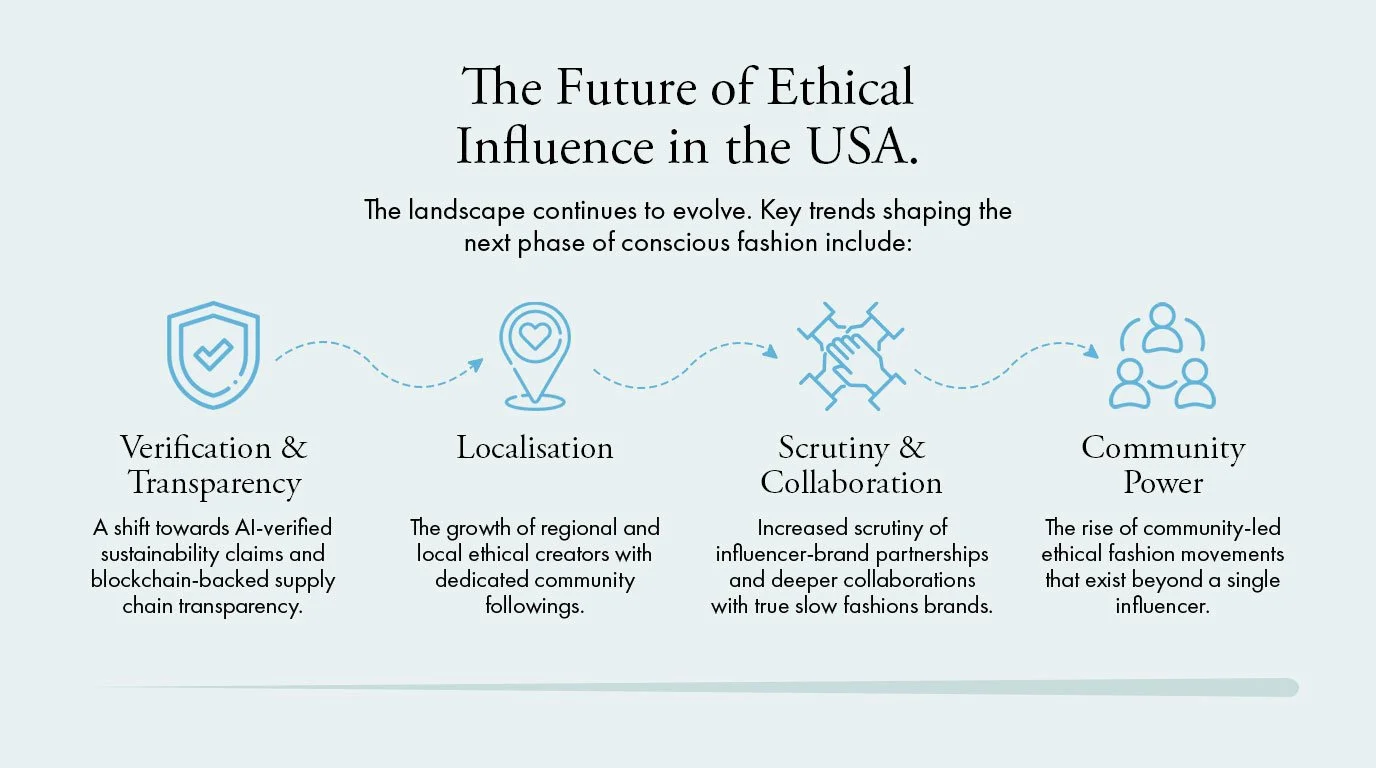
Future Trends in Ethical Fashion Influencing in the USA
AI-verified sustainability claims
Blockchain-backed supply chain transparency
Growth of regional and local ethical creators
Increased scrutiny of influencer-brand partnerships
Community-led ethical fashion movements
The rising influence of slow fashion brands: Ethical fashion influencers are increasingly collaborating with slow fashion brands to showcase sustainable outfits, promote conscious fashion choices, and inspire their audiences to support small, sustainable labels. This trend is shaping the future of ethical fashion by encouraging rewearing, thoughtful styling, and a more mindful approach to fashion consumption.
Frequently Asked Questions
Who are the best ethical fashion influencers in the USA?
Some of the most trusted ethical fashion influencers in the U.S. include Aja Barber, Aditi Mayer, Kristen Leo, Dominique Drakeford, and Sustainably Chic.
Why should I follow ethical fashion influencers?
They help you make informed fashion choices, avoid greenwashing, and support brands that value people and the planet. Any fashion lover interested in sustainability and ethics can benefit from following these influencers for inspiration and practical tips.
Do ethical fashion influencers only promote expensive brands?
No. Many U.S.-based ethical fashion influencers focus on thrifting, slow fashion, and budget-friendly alternatives.
Key Takeaway
Ethical fashion influencers in the USA are redefining what influence means in 2026. By prioritizing transparency, education, and real impact, they empower consumers to move beyond fast fashion—and toward a more responsible future. Ultimately, these influencers inspire us to cherish our loved clothes, encouraging more meaningful and sustainable fashion choices.